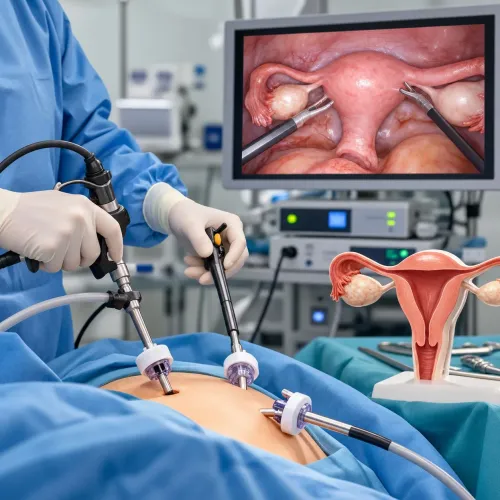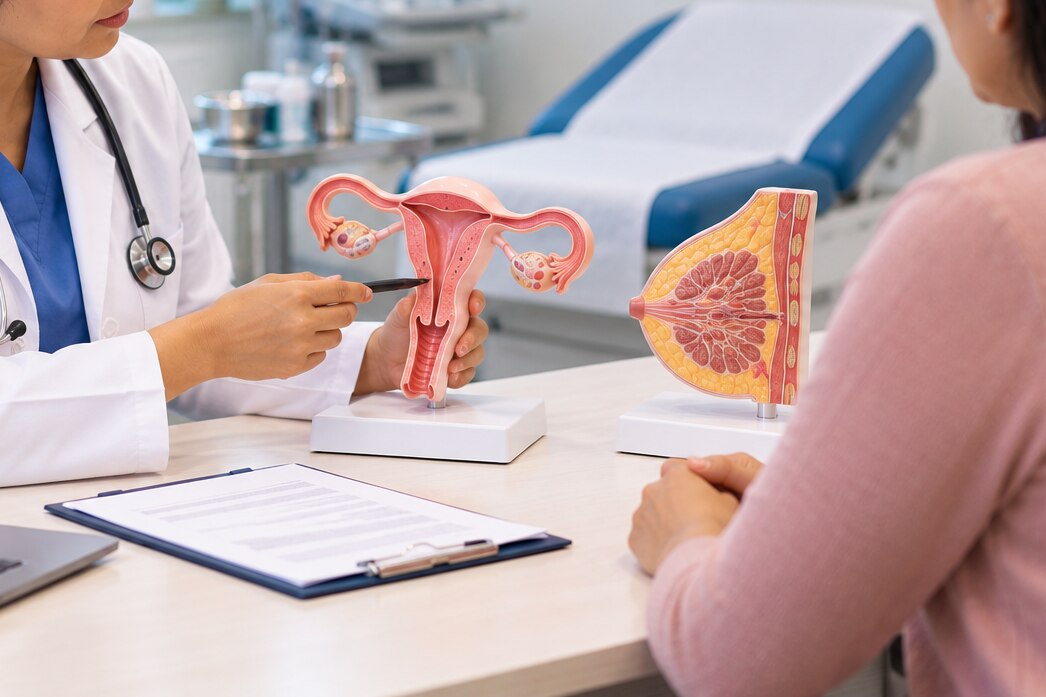
The right test depends on your age, symptoms, previous results and personal risk. By the end, you will know which breast and cervical screening options apply to average-risk women, when a symptom requires diagnostic assessment instead, and what to confirm before booking a clinic or laboratory appointment.
Key takeaways
- Start screening by age and risk, not age alone.
- Choose mammography, ultrasound or MRI based on symptoms and risk.
- Ask what an abnormal mammogram requires before booking follow-up.
- Confirm whether Pap, HPV testing or co-testing suits your age.
What is the age-based screening schedule for an average-risk woman?
At average risk, breast screening commonly begins at 40, while cervical screening begins at 21. The interval depends on the test and guideline, so breast and cervical screening tests in Bangalore should not be booked from age alone.
| Test or guidance | Starting age | Interval and stopping point |
|---|---|---|
| Mammography, USPSTF | 40 | Every two years through 74; after 74, decide with your clinician based on health and preferences |
| Mammography, other guidance | 40 or 45 | Annual screening at 45–54, then at least every two years under American Cancer Society guidance; local practice varies |
| Cytology, USPSTF | 21 | Every three years from 21–29 |
| HPV-based cervical screening, USPSTF | 30 | Primary high-risk HPV testing every five years, co-testing every five years, or cytology every three years through 65 |
| WHO and Indian programmes | 30 | WHO prefers HPV-DNA testing every five years through 65; Indian public programmes have used VIA for eligible women aged 30–65 |
Stopping cervical screening at 65 requires adequate previous normal results and no high-risk history, such as previous cervical precancer. Do not apply these schedules to pregnancy, HIV, immunosuppression, a total hysterectomy, an abnormal result or other special circumstances. A lump, nipple discharge or abnormal bleeding needs diagnostic assessment at any age, not routine screening alone.
Confirm Bangalore eligibility, available tests and follow-up arrangements before booking.
Which breast test should you choose for screening, symptoms or higher risk?
Mammography is the standard screening test for an average-risk woman, usually every two years from ages 40 through 74 under USPSTF guidance. Book Pap smear and breast screening as separate decisions: one test cannot screen for the other cancer.
| Option | What it shows | When it applies |
|---|---|---|
| Mammography | X-ray images that detect many breast cancers and calcifications | Routine screening for average-risk women |
| Digital mammography with tomosynthesis | Multiple angled images that create additional breast views | Screening or assessment when breast density, findings or clinical judgement support it |
| Ultrasound | Sound-wave images that characterise tissue and lumps | A palpable lump, a mammographic finding or an adjunct for dense breasts; it does not replace mammography |
| MRI | Contrast-enhanced detailed breast images | Substantially increased risk, such as a lifetime risk around 20%–25% or greater, a pathogenic BRCA1 or BRCA2 variant, strong family history or prior chest radiation |
| Clinical breast examination | Hands-on assessment of the breast and underarm | A useful examination, but not a substitute for imaging |
A normal ultrasound does not exclude every cancer, and MRI does not replace mammography because some cancers show more clearly on X-rays. Breast screening in Bangalore should therefore match your age, breast density, family history, previous biopsy results and genetic risk.
Do not wait for routine screening if you notice:
- A new lump or underarm lump
- Bloody nipple discharge, nipple inversion or skin dimpling
- Persistent focal breast pain
Any of these needs diagnostic assessment at any age, even after a recent normal mammogram.
What happens during breast screening and after an abnormal mammogram?
Mammography is usually a short examination with low radiation exposure, but not a zero-risk procedure. Each breast is briefly compressed between plates to reduce movement and produce clearer images; discomfort varies, so tell the technologist if compression is painful.
- On the day, avoid talcum powder, deodorant and creams on your breasts or underarms because they can create marks that resemble abnormalities.
- Wear a two-piece outfit so you only need to remove your top.
- Tell the imaging team if you are pregnant or might be pregnant.
- Consider booking after menstruation if your breasts are usually most tender during your period.
An abnormal or incomplete mammogram is not a cancer diagnosis. The radiologist may request additional mammographic views, a targeted ultrasound, comparison with older images, an MRI or a biopsy. Dense tissue, overlapping tissue or a technical limitation can produce a callback.
Before leaving, ask who reviews the images, when the report will arrive and who coordinates follow-up. Do not assume a callback confirms disease, but do not ignore it either; ask when and where the next test will happen.
Bring earlier breast images and reports if available, because comparison can clarify a finding and prevent unnecessary repeat investigations.
Should you choose a Pap test, HPV test or co-test?
Choose the test that matches your screening pathway: a Pap test examines cells, an HPV test detects infection, and a co-test does both.
| Test | What it measures | What the result means |
|---|---|---|
| Pap cytology | Cervical cells under a microscope | Abnormal cells may indicate precancerous change and need follow-up |
| High-risk HPV test | Cancer-associated HPV types in a cervical sample | HPV is detected or not detected; a positive result is not a cancer diagnosis |
| Co-test | Pap cytology and high-risk HPV testing from the same collection | Both results guide the next step |
Follow-up after HPV detection depends on the genotype where available, Pap findings, examination findings and previous results. Persistent high-risk HPV infection can cause precancer over years, so do not treat a positive result as proof of cancer—or ignore it.
Validated HPV self-sampling is an access option when the laboratory and clinician pathway supports it. A positive self-sample still requires directed follow-up, which can include clinician examination, cytology or colposcopy. It is not a complete cancer-management pathway.
VIA, used in some National Health Mission settings for eligible women, is a visual examination after applying acetic acid. A VIA result is not equivalent to an HPV-negative result. Ask which test was performed.
A Pap smear is a cervical test, not a breast test; breast screening uses different methods. Seek clinical review for bleeding after sex, bleeding between periods, persistent unusual discharge, pelvic pain or bleeding after menopause, even after a normal Pap, HPV or VIA result.
If you are overdue or cannot find an old report, disclose that history before repeating or skipping testing.
What should you ask before booking screening in Bangalore?
Before booking breast screening in Bangalore or cervical screening in Bangalore, confirm that the clinic can explain an abnormal result and arrange the next step.
1. Ask for the exact test name: mammography, tomosynthesis, ultrasound, MRI, Pap cytology, high-risk HPV testing, co-testing or VIA. Ask which guideline, age range and risk criteria support that choice.
2. Ask how often you need the test and whether your age, dense breasts, symptoms, previous abnormal result, BRCA1 or BRCA2 risk, family history or prior chest radiation changes the plan.
3. Confirm preparation. Ask about menstruation, possible pregnancy, deodorant or creams before mammography, and medicines or treatments that could affect cervical sampling.
4. Ask how the report will arrive, the expected turnaround time and the named clinician who will explain an abnormal or incomplete result.
5. Ask what follow-up the clinic provides: repeat imaging, comparison with older images, colposcopy, biopsy or referral. A report upload without a follow-up pathway leaves you to coordinate the most important step.
6. Bring previous breast images, biopsy reports, cervical results, surgery details and family history of breast, ovarian or related cancers. Ask whether the clinic can access outside records.
A women cancer screening doctor such as Dr Rajani vaidya can connect the test choice with your history. Check the clinic’s equipment, collection method, fees, availability and follow-up pathway directly, especially when symptoms or prior abnormalities require an individualized plan.
Related services
Breast and Cervical Cancer Screening Breast and Cervical Cancer Screening Early detection is the most powerful tool in the fight against cancer. View service → |
Pap Smear, HPV Testing Cervical cancer is one of the most preventable forms of cancer, yet it continues to affect thousands of women each year. View service → |
Frequently asked questions
What is the age-based screening schedule for an average-risk woman?
Breast screening commonly begins at age 40. Cervical screening begins at age 21, with the test and interval changing by age and guideline.
Which breast test should you choose for screening, symptoms or higher risk?
Mammography is the standard screening test for many average-risk women. Ultrasound helps assess a symptom or dense breast finding, while MRI is reserved for selected higher-risk women.
What happens after an abnormal mammogram?
An abnormal screening mammogram does not diagnose cancer. The next step can include additional mammogram views, targeted ultrasound, breast MRI or biopsy.
Should you choose a Pap test, HPV test or co-test?
The choice depends on your age, previous results, vaccination and local guidance. Pap testing examines cervical cells, HPV testing detects high-risk HPV, and co-testing uses both.
What should you ask before booking screening in Bangalore?
Ask which test fits your age and risk, whether the facility performs follow-up imaging, how results are delivered, and who coordinates referral if a biopsy is needed.
Keywords