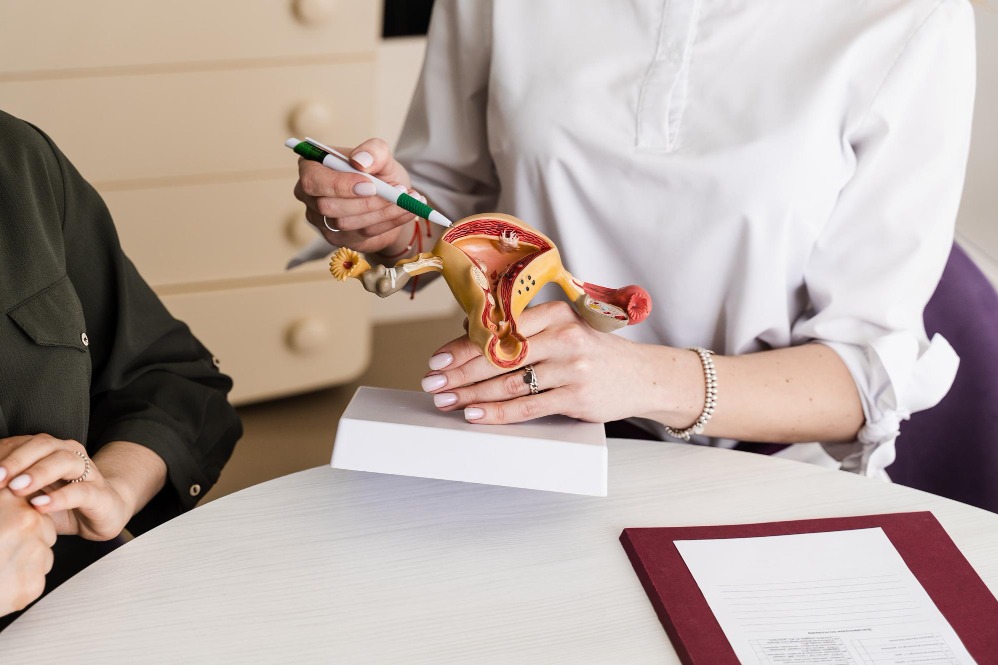
Pelvic organ prolapse occurs when weakened pelvic support allows one or more organs to descend toward or into the vagina. It may involve the bladder, uterus, bowel or upper vaginal wall. Pelvic organ prolapse treatment is selected according to the type of prolapse, symptom severity and its effect on everyday life.
What Does Pelvic Organ Prolapse Feel Like?
Some women have visible prolapse without major discomfort, while others experience significant symptoms. Possible concerns include:
- Vaginal heaviness or dragging
- A bulge felt or seen near the vaginal opening
- Difficulty emptying the bladder
- Frequent urination
- Urinary leakage
- Constipation or incomplete bowel emptying
- Discomfort during intercourse
- Symptoms that worsen after prolonged standing
Prolapse is not usually life-threatening, but it can affect movement, exercise, work, intimacy and confidence. The grade found during examination does not always reflect how troublesome the symptoms are.
Can Lifestyle Changes and Exercises Help?
Mild prolapse symptoms may improve with measures that reduce pressure on the pelvic floor. These can include:
- Treating constipation
- Avoiding repeated heavy straining
- Managing a chronic cough
- Maintaining a suitable body weight
- Adjusting activities that worsen symptoms
- Practising pelvic-floor muscle exercises
Pelvic-floor muscle training may be useful for mild or moderate prolapse. Correct technique is important, so supervised pelvic-floor physiotherapy may be more effective than performing unsupervised exercises incorrectly.
Exercises can improve support and symptoms, but they may not fully reverse an advanced prolapse.
When Can a Vaginal Pessary Be Used?
A pessary is a removable support device fitted inside the vagina. It may be appropriate for women who:
- Prefer to avoid or postpone surgery
- Are planning a future pregnancy
- Have health conditions that increase surgical risk
- Need symptom support while awaiting surgery
- Want a reversible treatment option
Finding a comfortable shape and size can require more than one fitting. Pessaries also require appropriate cleaning, review and vaginal-health monitoring. They support the prolapse while being used but do not permanently repair the weakened tissues.
When Is Surgery Considered?
Surgery may be discussed when symptoms substantially affect daily life and conservative treatment has not provided adequate relief.
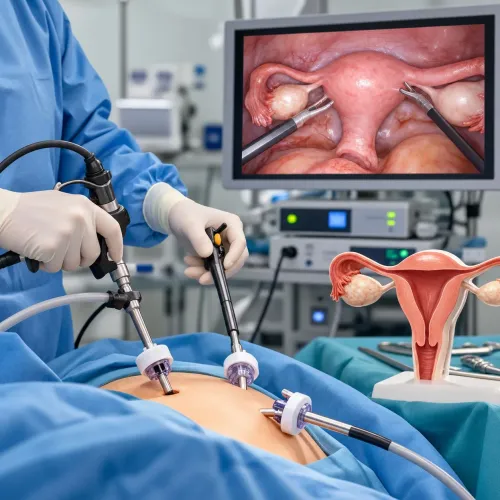
The procedure depends on the organ involved, previous surgery, age, general health, sexual function and whether the woman wishes to retain her uterus. Options may include vaginal repair, uterine-sparing suspension procedures or operations performed with laparoscopic assistance.
Hysterectomy may be considered in selected cases of uterine prolapse, but removal of the uterus is not compulsory for every patient. Women should also ask whether mesh or graft material is proposed and why it is considered appropriate.
How Do the Treatment Options Compare?
Pelvic-floor exercises are non-surgical and require consistency. They may improve mild symptoms but may not provide sufficient support for advanced prolapse.
A pessary provides reversible support and avoids an operation, but it requires ongoing fitting and maintenance.
Surgery can provide stronger anatomical correction but involves anaesthesia, recovery and possible complications. Prolapse can also recur after an operation.
Women seeking pelvic organ prolapse treatment in Bangalore can consult Dr Rajani Vaidya for an examination that assesses the affected pelvic structures and associated bladder or bowel symptoms. Treatment can then be planned according to the findings and the woman’s preferences.
Urgent assessment is appropriate if the prolapse becomes severely painful, causes an inability to pass urine, develops bleeding or ulceration, or cannot be pushed back when it previously could. In most cases, however, women have time to compare conservative and surgical options before deciding how to proceed.
Keywords